)
)
)
Mintel sets out the big food and drink trends shaping 2026 at IFE Manufacturing
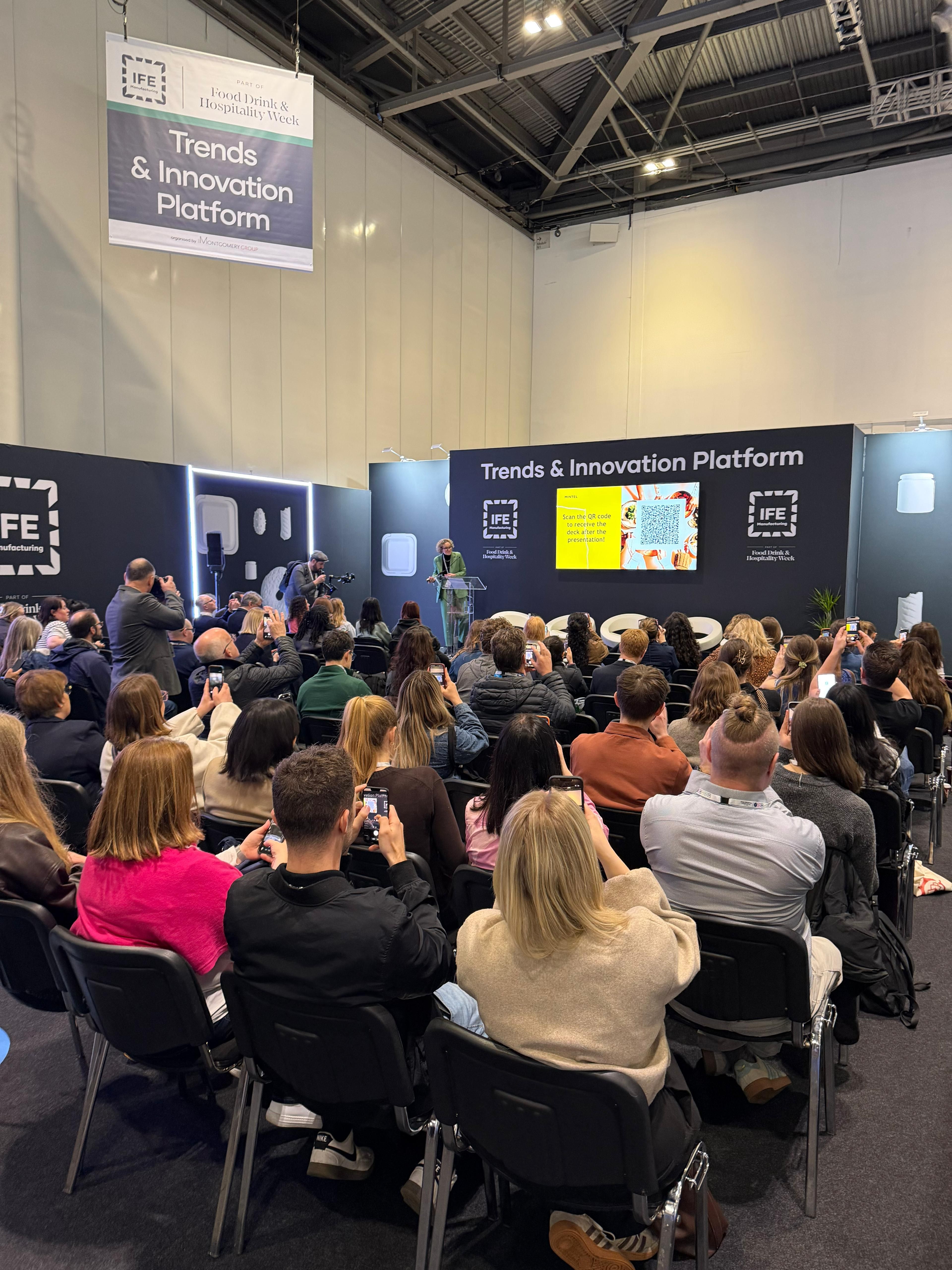
Visitors to the Trends & Innovation Platform at IFE Manufacturing heard from Alice Pilkington, Associate Principal at Mintel, as she explored the key forces set to shape food and drink innovation in the year ahead.
Framing 2026 around a shift from resilience to perseverance, Pilkington highlighted how ongoing geopolitical instability, economic pressure and global uncertainty are influencing consumer behaviour. Rather than simply reacting to challenges, consumers are becoming more proactive in how they navigate them, and are looking to food and drink brands to support this mindset.
At the heart of Mintel’s predictions is a clear expectation: products must balance pleasure with purpose. Enjoyment remains essential, but it must sit alongside functionality, nutrition and convenience. This is driving a more sophisticated approach to product development, where indulgence and wellbeing are no longer seen as opposing forces.
One of the most significant shifts identified is a move away from “maxxing out” single nutrients towards embracing dietary diversity. After years of focus on low-fat, low-carb and high-protein diets, consumers are beginning to prioritise balance and variety across ingredients and sources. Within this, fibre is emerging as a major opportunity. With 96% of UK adults failing to meet recommended intake levels, digestive health is climbing the agenda, driven by ageing populations, growing scrutiny of ultra-processed foods and wider interest in preventative health.
Protein, while still important, is expected to reach a plateau. Pilkington noted that the category faces increasing challenges, from overconsumption among some groups to perceptions shaped by extreme or overly masculine branding. At the same time, key audiences such as older consumers remain underserved, despite having a greater physiological need for protein.
The session also explored the impact of GLP-1 weight-loss drugs, which are beginning to reshape eating habits and consumer expectations. As appetite changes and snacking behaviours shift, there is growing demand for products that address side effects such as digestive discomfort, while also reintroducing enjoyment through texture, flavour and format.
Beyond nutrition, consumers are increasingly looking both forwards and backwards for inspiration. “Retro rejuvenation” reflects a desire for familiarity and comfort, with renewed interest in traditional ingredients, heritage recipes and slower food practices. However, these must still meet modern expectations around convenience, quality and sustainability. At the same time, supply chain pressures are driving interest in local and resilient ingredients, with alternatives such as yaupon gaining traction as viable options in a more uncertain global landscape.
Multisensory innovation is also evolving. Texture, aroma and format are moving beyond novelty to become more purposeful tools in product development. Pilkington pointed to Asian markets as a source of inspiration, where sensorial innovation is already more advanced and strategically applied.
Across all of these trends, the importance of inclusive innovation was clear. From older consumers to neurodiverse audiences, there are significant opportunities for brands willing to rethink how they develop and position products. Collaboration across manufacturers, brands and retailers will be key to delivering meaningful change.
As the food and drink landscape continues to evolve, the session provided a clear message: success in 2026 will depend on delivering products that not only meet changing consumer needs, but also help them navigate an increasingly complex world.
Find out more about Mintel's food & drink insights, and requrest the full presentation from IFE at mintel.com/insights/events/mintel-at-ife-international-food-drink-expo.
)
)