)
)
)
The science of spooky: The ingredients behind Halloween’s colours, textures and surprises
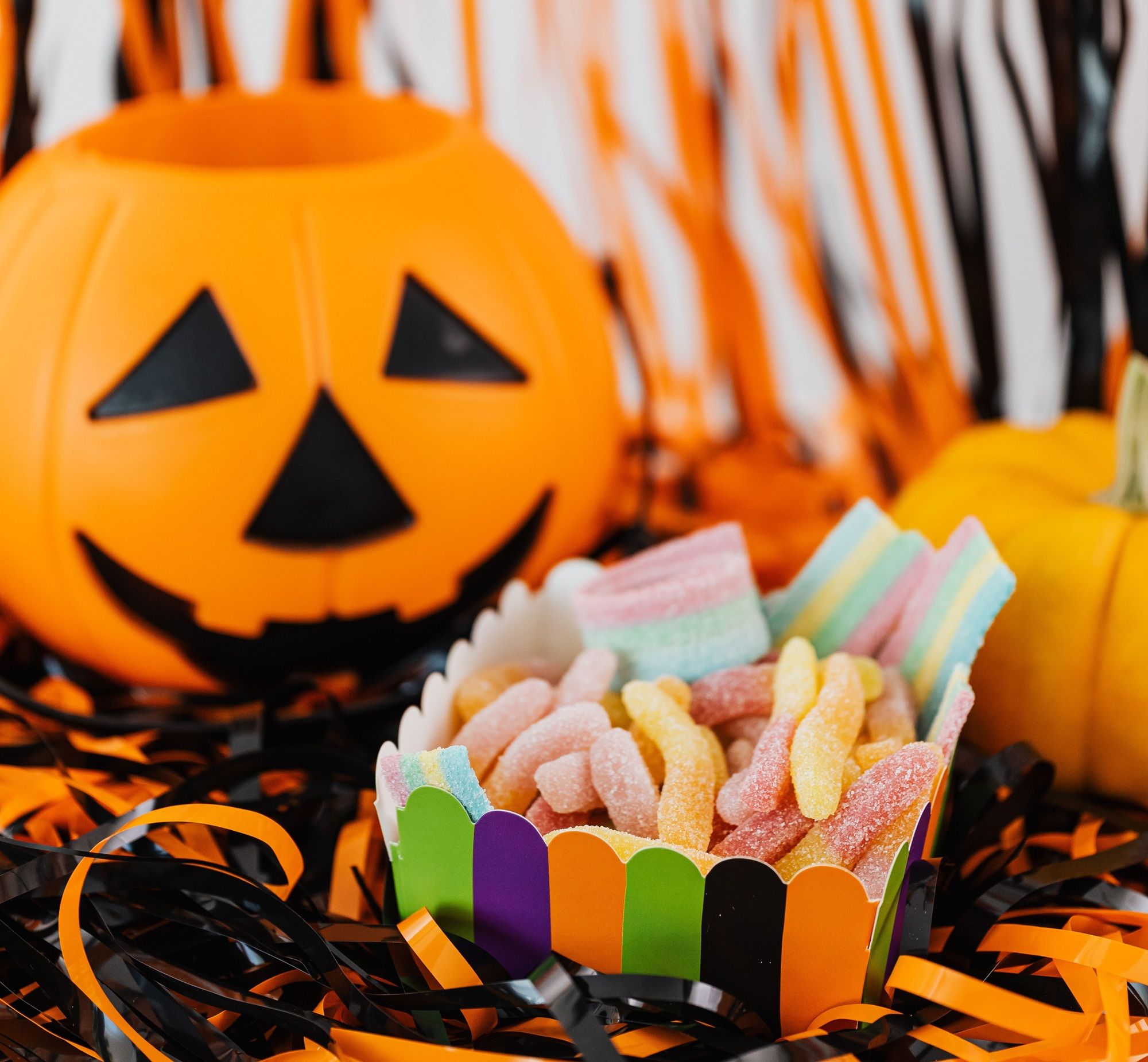
Gummy brains, ghost marshmallows and a lunchtime wrap with a fiery surprise: the UK supermarkets’ Halloween 2026 launches offer plenty of inspiration for food developers.
Aldi’s Halloween announcement includes Gummy Brains, Fizzy Spiders and a new Halloween Munch Mix. Asda’s seasonal food-to-go launch brings contrasting sweet and spicy fillings to its Horror Emporium range, while Morrisons’ Halloween announcement highlights red toffee and chocolate-coated apples alongside British-grown pumpkins.
Behind these playful concepts are familiar development challenges: achieving the right colour, controlling texture and delivering a sensory experience that lasts through storage. For IFE Manufacturing’s ingredients and NPD community, Halloween provides a useful window into the science behind seasonal innovation.
A frightfully good colour
Blood-red fillings and deep purple drinks can draw on anthocyanins, a family of plant pigments found in sources including blackcurrants, grape skins, black carrots and red cabbage.
Their colour depends partly on pH — a measure of acidity — because changes in pH alter the balance between different chemical forms of the pigment. This creates possibilities for dramatic shades and, in suitable formulations, colour-changing effects.
However, anthocyanins do not follow one universal colour chart. The pigment source, other ingredients and processing conditions all influence the result. The Royal Society of Chemistry’s overview of natural colourants explains how temperature, light, oxygen and pH affect their colour and stability.
For developers, the finished recipe is therefore the essential testing ground. A promising purple in an ingredient sample needs to be assessed after mixing, processing and storage.
The brief should cover more than the launch-day shade: will the colour remain convincing at the end of shelf life, and will any adjustment to acidity also change the flavour?
Getting gummy worms to wriggle
Aldi’s 2026 range includes Gummy Brains and Fizzy Spiders, plus a Halloween Sweet Tub containing blackcurrant, strawberry and orange gummy skulls, bats and ghosts. Its Halloween Mallow Bag adds fluffy ghost marshmallows to the seasonal selection. These products demonstrate the creative possibilities of shaped confectionery, although the announcement does not specify their gelling systems.
Across confectionery development, the mould creates the outline, while the formulation determines the bite.
Gelatine can provide an elastic gummy texture and help create and stabilise marshmallow foam. Its gels are thermoreversible: they can melt on heating and form again on cooling. The melting behaviour depends on the formulation, including water content, rather than one fixed temperature for every sweet. GELITA’s confectionery technical guide explains these functions.
Pectin offers a plant-derived gelling option, but selecting the right type matters. Conventional high-methoxyl pectins generally need sufficiently high sugar levels and acidic conditions to gel. Low-methoxyl pectins form gels through interactions with calcium ions, as explained in Pacific Pectin’s technical overview.
For a development team, changing the gelling ingredient or reducing sugar can therefore require reformulation. The target chew, shape retention and storage performance all need to be considered together.
A trick-or-treat twist on heat
Halloween innovation also extends into savoury food. Asda’s Horror Emporium Trick or Treat BBQ Chicken Wrap combines a sweet and smoky BBQ chicken filling on one side with a fiery habanero BBQ chicken filling on the other. The retailer describes it as a seasonal surprise within its food-to-go range.
The science of chilli heat helps explain the appeal of this contrast. Capsaicin activates TRPV1, a sensory receptor that also responds to heat. The resulting burning sensation is a sensory response, rather than evidence that the food itself has become physically hotter. Research published in Nature Structural & Molecular Biology examines how this receptor responds to capsaicin and heat.
For manufacturers exploring similar concepts, the development brief might include how distinct the two fillings should taste and how consistently they can be portioned. The surprise needs to be repeatable across production.
Building contrast into a Halloween snack mix
Aldi’s new Halloween Munch Mix combines milk chocolate shapes, pretzels, candy-shelled chocolate lentils, crispy malt balls and toffee popcorn. Morrisons, meanwhile, is offering seasonal apple varieties spanning classic red toffee, chocolate, and milk or white chocolate with toppings.
For NPD teams, these are useful examples of building a product around contrasting components. A development brief can consider the balance between crunch, coating and sweetness, alongside the proportions needed to deliver a consistent experience.
Another route to sensory surprise is popping candy. Tiny pockets of pressurised carbon dioxide are trapped within its sugar structure. When the sugar dissolves in saliva, the gas escapes, creating the crackling sound and popping sensation. The American Chemical Society explains that this is a physical process, rather than a chemical reaction generating new gas in the mouth.
Moisture can trigger that effect prematurely. Some suppliers will offer fat- and chocolate-coated versions designed to help protect popping candy in food applications. Developers still need to test its performance within the intended recipe and throughout storage.
Making the magic repeatable
This year’s supermarket launches provide starting points for seasonal development: recognisable shapes, contrasting textures and an unexpected flavour experience.
Turning those ideas into reliable products requires trials that assess appearance, flavour and texture after processing and throughout the intended shelf life, using the proposed packaging and storage conditions.
Halloween gives manufacturers room to experiment. Understanding how ingredients behave is what allows a spooky concept to deliver the same enjoyable experience from the first production batch to the final pack.
)
)
)