)
)
)
Broken Plate 2026 report highlights growing pressure on food manufacturers to deliver healthier, more affordable products
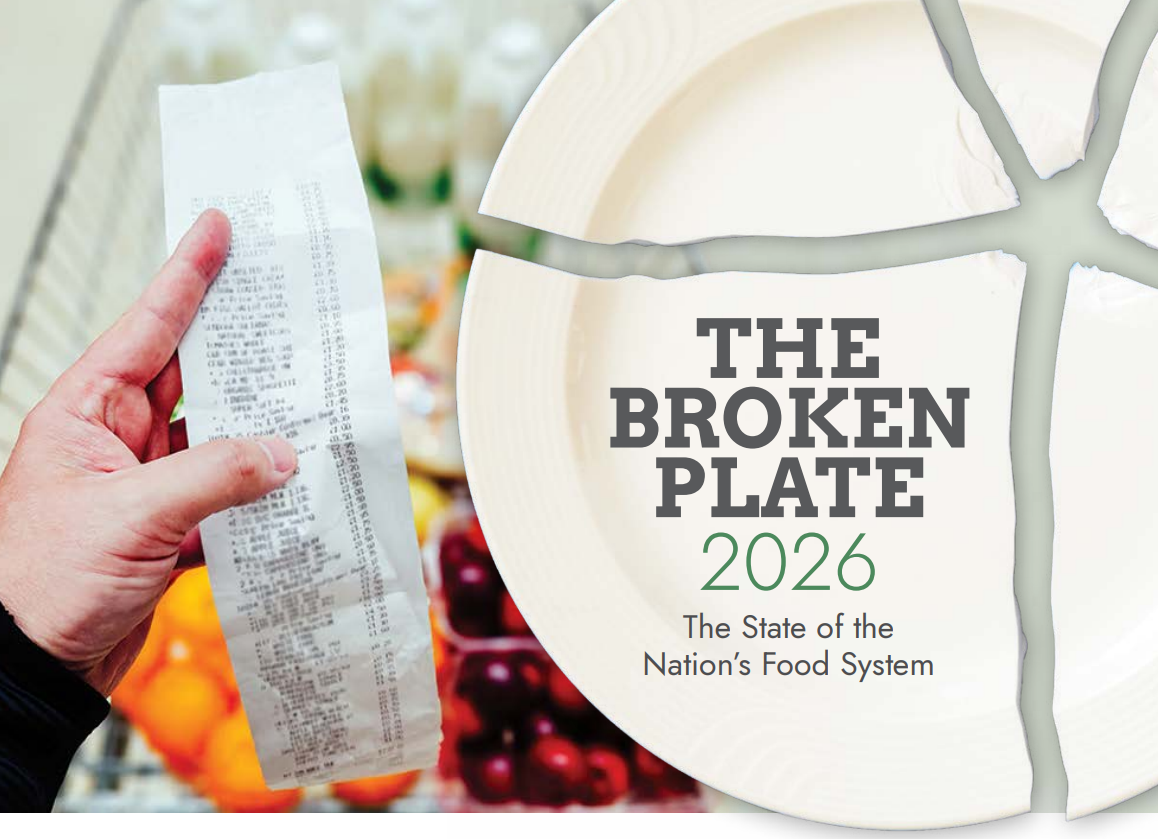
Food and drink manufacturers are facing increasing pressure to help tackle the UK's nutrition and affordability challenges, according to the latest Broken Plate report from The Food Foundation.
The annual assessment of the UK food system paints a concerning picture of widening nutritional inequalities, rising food insecurity and the growing cost of healthy diets, while highlighting the critical role that manufacturers can play through product innovation, reformulation and investment in healthier food production.
Commenting on the report, Sir Michael Marmot, one of the UK's leading public health experts and Director of the UCL Institute of Health Equity, said: "Improving healthy eating requires, at the minimum, an understanding of influences on nutrition and its consequences; and monitoring of progress. Broken Plate does both of these admirably and fulfils an urgent national need."
Among the report's key findings, healthier foods remain nearly twice as expensive per calorie as less healthy foods, with the affordability gap continuing to widen. Households with children in the lowest income bracket would need to spend 85% of their disposable income on food to afford a diet that meets Eatwell Guide recommendations.
The report also highlights ongoing challenges around sustainable food production, finding that pre-prepared plant-based alternative products are, on average, 56% more expensive per calorie than equivalent meat products.
For manufacturers investing in alternative proteins and next-generation food products, the findings underline the importance of developing solutions that can deliver on affordability as well as nutritional and environmental credentials.
The report identifies several opportunities for innovation across food manufacturing, particularly in product reformulation. In the breakfast cereal category, for example, only one in ten children's cereals are classified as high in fibre, while one in five remain high in sugar.
The Food Foundation argues that improving the nutritional quality of everyday products will be essential if healthier diets are to become more accessible to consumers.
Potential policy implications for manufacturers
Alongside its assessment of the food system, the report outlines a series of policy recommendations that could have significant implications for food and drink manufacturers.
Among them is a proposal for a new levy on unhealthy food products, designed to incentivise reformulation while generating funding to improve access to healthy and sustainable diets. The report also calls for wider use of nutrient profiling standards across food policy and mandatory reporting of healthy food sales by large businesses.
The recommendations build on the success of previous interventions such as the Soft Drinks Industry Levy, which helped drive reformulation efforts across the beverage sector.
For manufacturers, the report signals a future in which nutritional performance, affordability and sustainability are likely to become increasingly important measures of commercial success.
A changing food production landscape
The findings come as food producers continue to navigate inflationary pressures, evolving consumer expectations and increasing scrutiny of the food system's environmental impact.
The report notes that emissions linked to the UK's food system have fallen by just 22% since 2008, compared with a 41% reduction across the wider UK economy, highlighting the scale of the challenge facing the sector.
At the same time, food insecurity is once again rising, with more than six million adults and 2.1 million children experiencing food insecurity in early 2026.
For food manufacturers, the message is clear: future growth opportunities will increasingly be linked to the ability to produce foods that are healthier, more sustainable and affordable, while meeting the changing needs of consumers, retailers and policymakers alike.
The full Broken Plate 2026 report is available from The Food Foundation at foodfoundation.org.uk/publication/broken-plate-2026.
)
)
)
)
)
)
)
)
)
)
)
)
)
)
)
)
)
)
)
)
)
)
)
)
)